

FloraComplex


Are you a vet? Then you can register and order directly. For pet owners: Inuvet products are only available at veterinary practices, along with expert advice from the practice team.
Already registered? You can log in here.
Antibiotic treatments, deworming, or even parasitic infestations can disrupt the balance of the gut flora. The high concentration of probiotic gut cultures in FloraComplex ensures that a large number of these cultures survive passage through the stomach and reach the intestines. There, they stabilize the gut flora and thus strengthen the immune system. The inulin it contains ensures that the cultures accumulate sustainably in the gut, serving as a food source for various microorganisms.
FloraComplex can be fed directly or mixed into the feed.
Enterococcus faecium (Probiotic bacterial cultures) Enterococcus faecium cultures help to build up the intestinal flora in a natural way. They settle in the intestine and support the regulation of intestinal peristalsis. The cultures also help to ensure that there are fewer pathogenic intestinal bacteria in the intestine. They compete with them for receptors on the intestinal epithelium and change the luminal pH value in such a way that the binding ability of pathogenic intestinal bacteria is influenced. In the case of a weakened intestine in particular, this can displace the harmful microorganisms in favor of the natural intestinal flora.
Purple Coneflower Extract (Echinacea purpurea herba) In vivo studies have shown that various Echinacea preparations have an immune-modulating effect when administered orally.
Inulin (Prebiotic) belongs to the genus of prebiotics, that are not digestible by the body's own enzymes and are therefore a fermentable substrate for the bacteria of the intestinal flora. Inulin promotes the growth of beneficial intestinal bacteria such as Enterococcus faecium without benefitting pathogenic germs. Consequently, inulin is recognized as having a positive effect on the immune system. Organic acids are released when intestinal bacteria such as Enterococcus faecium metabolize inulin. These acids have a stabilizing effect on the intestinal microbiota. Studies conducted on puppies have shown that adding inulin to food reduces the colonization of Salmonellae.
Milk and dairy products, inulin (from chicory, Jerusalem artichoke, artichoke or agave), meat and animal by-products, eggs and egg products, rice flour, corn starch
Crude protein (18.6%), crude ash (6.9%), crude fiber (1.2%), crude fat (2.9%)
Echinacea purpurea (purple coneflower) extract (60,000mg)
| Dogs | Number of tablets |
| <10kg | 1 |
| 10–20kg | 2 |
| >20kg | 3 |
| Once daily |
Enterococcus faecium DSM10663/NCIMB 10415 1x10^13 cfu
Keep out of reach of animals. Made in Germany.
Do not store above 30°C. Once opened, store in a cool, dry place and consume within 6 months.
dogs
Only in your practice
Do you spend a lot of time and energy advising your customers and recommending the right products? Are you also happy when the treatment works well, but are surprised when pet owners don't order recommended products from you, but instead order them online? Why don't you google it? You can find everything on the internet - except Inuvet products for sale. Sales are handled exclusively by your practice.
Do you spend a lot of time and energy advising your customers and recommending the right products? Are you also happy when the treatment works well, but are surprised when pet owners don't order recommended products from you, but instead order them online? Why don't you google it? You can find everything on the internet - except Inuvet products for sale. Sales are handled exclusively by your practice.
Mission: Green practice
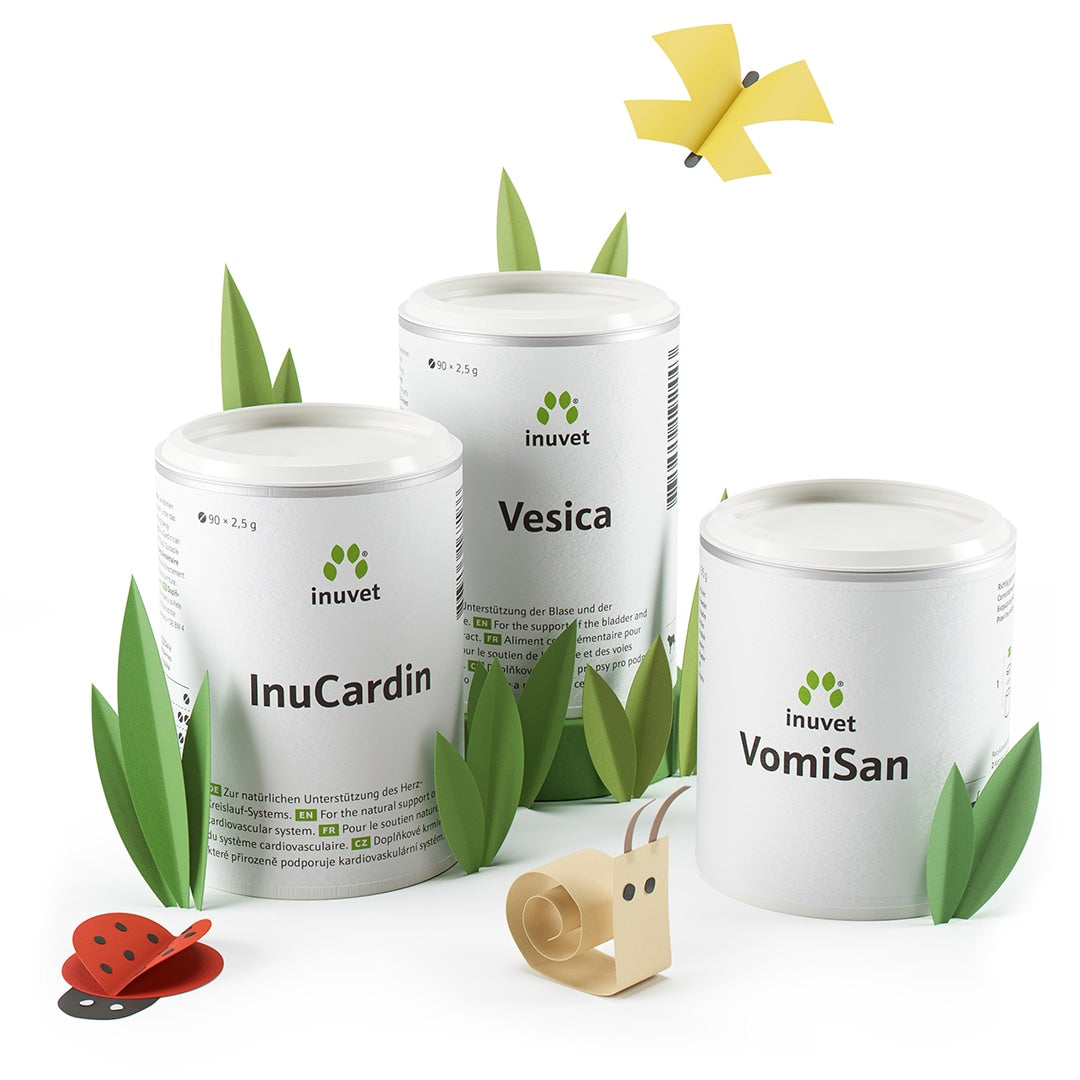
Paper packaging
A current estimate is that 12 million tons of plastic waste ends up in the ocean every year. That has to change: With new Inuvet packaging, you as veterinarians get an ecological alternative for your patient owners.
A current estimate is that 12 million tons of plastic waste ends up in the ocean every year. That has to change: With new Inuvet packaging, you as veterinarians get an ecological alternative for your patient owners.