Whitepaper
Free whitepaper: ManukaLind® (MGO 514+) & local wound care

ManukaLind® – natural wound care
Medical manuka honey (MGO 514+) for fast, reliable wound healing. Can be applied locally, strongly antibacterial and in practice often sufficient without systemic antibiotics.
- Visibly speeds up wound healing – often within a few days
- Reduces or avoids the use of antibiotics for many wound types
- Makes dressing changes painless and brings calm to the wound area
- For bite wounds, hotspots, surgical wounds, poorly healing skin lesions...

If wound healing does not occur
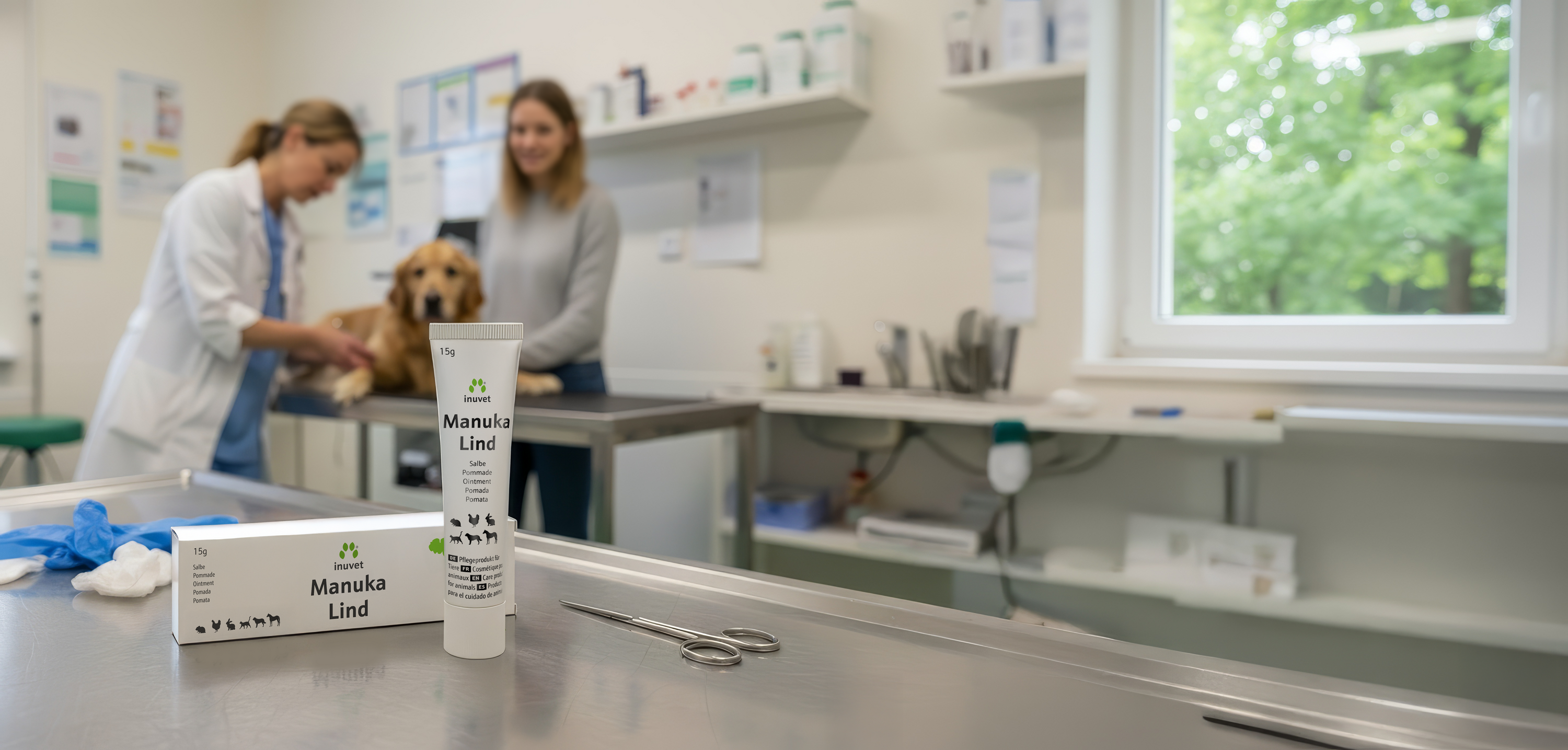
When wound healing stagnates: redness, wound fluid, a restless animal. The dressing sticks – every change takes time and puts a strain on the animal, the team and the owner. Under that pressure, antibiotics are reached for in some cases, while you would rather stabilise locally. Because waiting is often not an option.
The solution
Treat locally with ManukaLind®
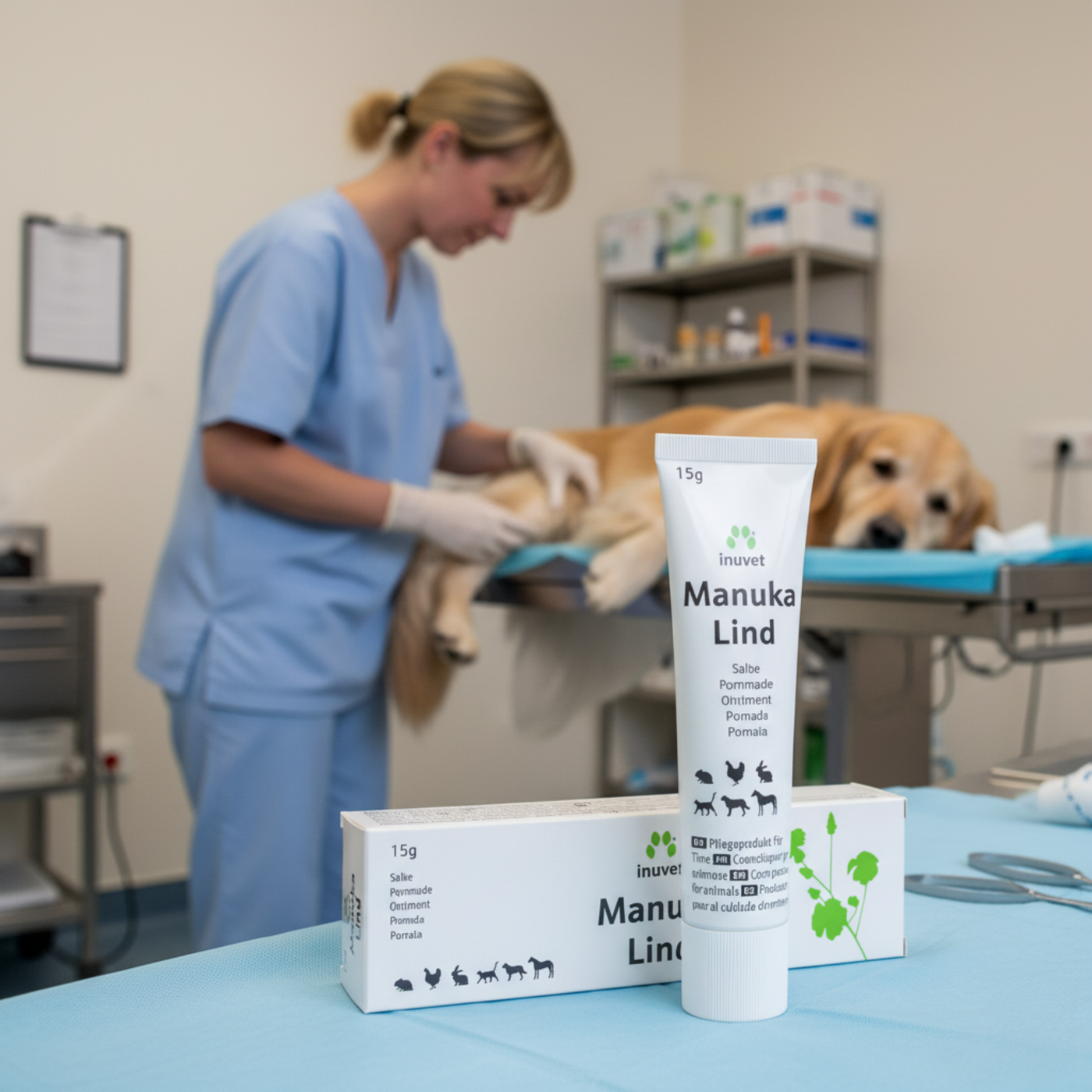
ManukaLind® was developed for this moment. When you want to get a wound under control locally – without intervening systemically straight away. The medical Manuka honey (MGO 514+) acts strongly antibacterial directly in the wound area. It brings calm to the wound bed and speeds up healing. Treat locally. Fast result. Without antibiotics.
ManukaLind® was developed for this moment. When you want to get a wound under control locally – without intervening systemically straight away. The medical Manuka honey (MGO 514+) acts strongly antibacterial directly in the wound area. It brings calm to the wound bed and speeds up healing. Treat locally. Fast result. Without antibiotics.

Locally applicable, no systemic burden
Strongly antibacterial due to high MGO concentration
Full control over the healing process
For acute, chronic and infected wounds

After surgery
Tumor removal
after 3 weeks

After surgery
Bite wound
after 10 weeks

Eczema
after 6 days

Wound
after 10 weeks

Abscess
after 5 weeks



What targeted local wound care can bring
When you consistently support wounds locally, it is mainly the day-to-day work that changes: less fuss around dressing changes, a clearer view of the wound, and often a calmer course for both animal and owner.
When you consistently support wounds locally, it is mainly the day-to-day work that changes: less fuss around dressing changes, a clearer view of the wound, and often a calmer course for both animal and owner.
Wounds calm down faster
Fewer infections and complications
Dressing changes go more calmly and painlessly
Less need to switch to antibiotics
Why Manuka honey works differently
Medical Manuka honey
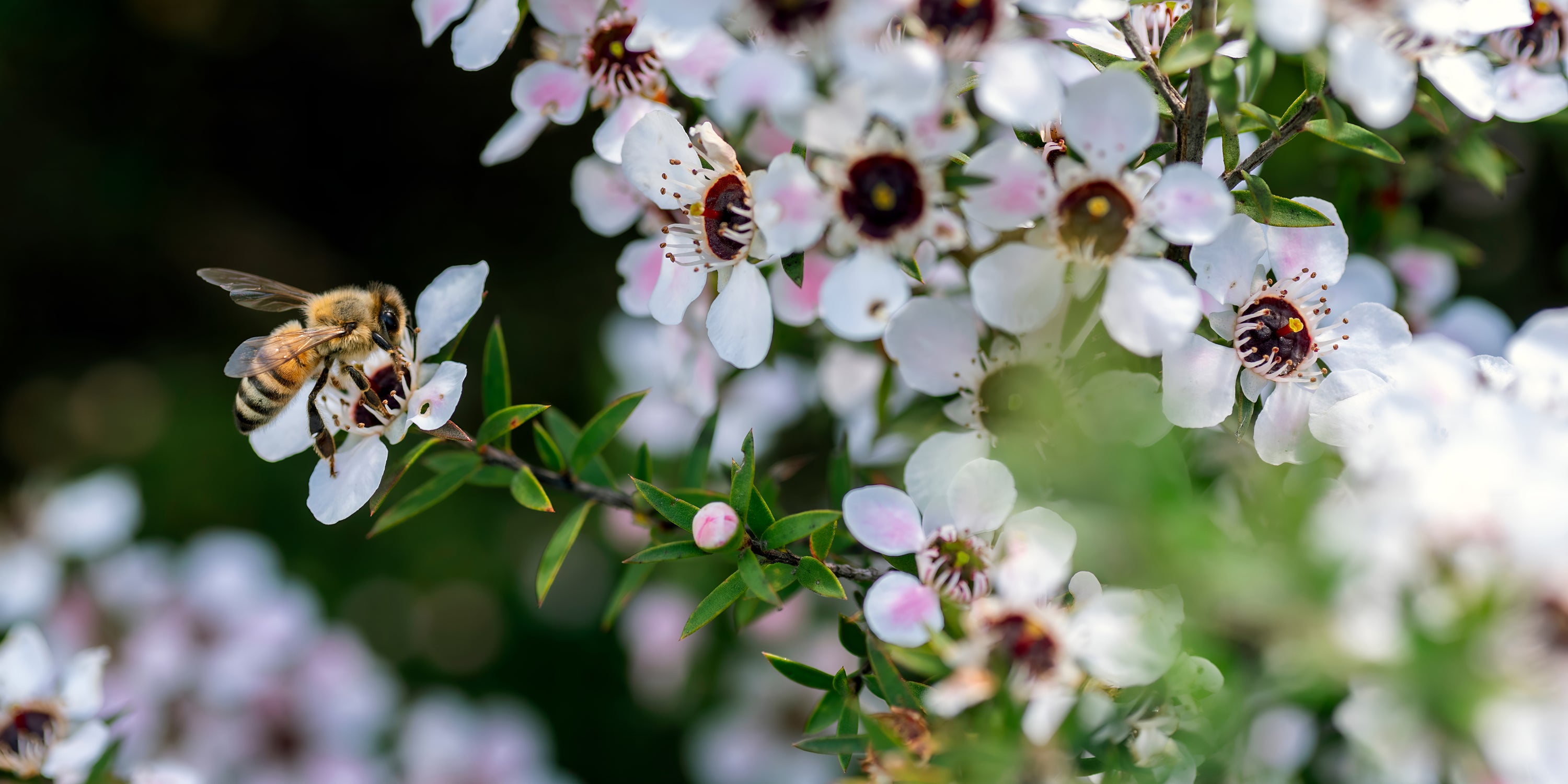
The Manuka honey in ManukaLind® comes from New Zealand and Australia and contains a high concentration of MGO (methylglyoxal) – the natural antibacterial component responsible for the unique action.
High concentration: MG0 514+
The measured concentration of methylglyoxal in the honey – a standardized quality measure that helps make the antibacterial potency comparable
Effective for problematic wound germs
Also where other remedies fall short

This is how you use ManukaLind®
Clean the skin (shave/clip the coat around the area if needed). Apply ManukaLind® thinly to the affected area. Repeat 1—2 x a day if needed.

Direct antibacterial action
ManukaLind® works locally in the wound area and inhibits bacterial growth immediately after application.
Active wound cleaning
Supports the removal of wound fluid and debris and helps keep the wound bed clean.
Stabilization of the wound environment
Keeps the wound moist and in balance, so that healing can proceed undisturbed.
Practical advantage in use
ManukaLind® does not adhere to the wound bed and makes dressing changes easier and painless.

Antibiotics when needed – not out of habit
ManukaLind makes it possible to act first in a targeted and local way – and to use antibiotics only when that is really necessary. This way you treat infections where they arise, keep the process under control and avoid unnecessary systemic burden.
ManukaLind makes it possible to act first in a targeted and local way – and to use antibiotics only when that is really necessary. This way you treat infections where they arise, keep the process under control and avoid unnecessary systemic burden.
Widely usable in everyday practice
ManukaLind® is used for a wide range of wounds and skin problems – both acute and chronic, simple or complex. Typical areas of use include:
- Surgical wounds
- Infected or necrotic wounds
- Wound dehiscence
- Abscesses and proud flesh
- Eczema, dermatitis and hot spots
- Mud fever and thrush
- Udder injuries
- Inflammations of the nail fold
- Dental alveoli
- Inflamed tick bites
- Pressure and lying sores
- Tumor cavities
Scientific evidence
Selection of relevant studies and specialist articles that demonstrate the antibacterial action and the wound-healing-supporting properties of medical honey/manuka.

First‑Intention Incisional Wound Healing in Dogs and Cats (2024)
Manuka honey speeds up epithelialization and lowers the infection rate in surgical incision wounds in dogs and cats.
to the study
Medical‑Grade Honey vs. Wound Pathogens (2024)
In vitro study: broad antibacterial spectrum of action (incl. multiresistant germs), more effective than standard antiseptics.
to the study
Meta-analysis: Honey in Wound Healing (2022)
Practical overview: honey is safe, effective and easy to integrate into existing wound protocols.
to the study
Revolutionizing Non-Conventional Wound Healing Using Honey
Meta-analysis: honey acts in an antimicrobial, antioxidant and anti-inflammatory way – promotes cell regeneration and shortens healing time.
to the study
ManukaLind® Bundles
- Keeps wounds clean, moist and protected
- Easy application without sticking
- Suitable for acute and chronic wounds
Order now with practice details
Fill in the form to place your order. Before we ship the order, we check your practice authorisation against the details entered. If we still have questions, we will contact you again.
Ingredients
Manuka honey (MGO 514+) is obtained in New Zealand by honey bees from the South Sea myrtle and has been used there for many generations. What makes this honey so special is the methylglyoxal, which occurs in manuka honey at a concentration hundreds of times higher than in ordinary blossom honeys. The MGO value indicates the amount of this substance (in milligrams per kilogram) and serves as a quality measure for the honey.
Comfrey extract (Symphytum officinale) supports skin regeneration to a high degree. The allantoins present in the root and herb have a positive effect on skin cell growth. In addition, comfrey extracts stimulate blood flow in irritated areas of skin and can help to calm them.
Essential oils (lavender, thyme) are not very palatable and reduce licking. The oils also keep flies and mosquitoes at a distance.
FAQ
Within 30 days of the first order, we refund the full amount on request – without discussion.
We'll send an invoice once we've checked your authorization to practice.
The Manuka honey comes from New Zealand and Australia, where the Manuka shrub (Leptospermum spp.) occurs naturally. Only honey with a controlled and standardised MGO value is used for medical applications.
MGO stands for methylglyoxal, the natural antibacterial component of Manuka honey. The MGO value indicates the amount of methylglyoxal in mg/kg. MGO 514+ stands for very high antibacterial activity.
ManukaLind is used for, among other things, surgical wounds (including infected or necrotic), wound dehiscence, abscesses, proud flesh, eczema and dermatitis, hot spots, mud fever, thrush, udder injuries, nail-fold inflammation, tooth sockets, inflamed tick bites, pressure and lying sores and tumour cavities.
Yes. Thanks to the high MGO concentration, ManukaLind works locally as an antibacterial and is also used for infected and problematic wounds.
No. ManukaLind is not an antibiotic. It does make it possible to treat locally and in a targeted way first, so antibiotics can be used more deliberately and more specifically when that is needed.
By putting local wound treatment at the center, unnecessary or routine antibiotic use can be reduced. Antibiotics remain available for situations in which they are clinically indicated.
Yes. ManukaLind can also be applied over a longer period, for example on chronic or poorly healing wounds. There is no known local tissue toxicity.
No. ManukaLind supports a moist, pH-optimized wound environment that promotes granulation tissue and epithelialization, without drying out or damaging healthy tissue.
No. ManukaLind does not adhere to the wound bed, so dressing changes are easier and painless.
Yes. The viscosity of ManukaLind makes application via a button cannula possible, for example for anal gland flushes or in wound cavities.
ManukaLind is used in various animal species in veterinary medicine. Local application and good tolerability make it widely usable in practice.
No. ManukaLind contains no corticosteroids, no antibiotics and no synthetic antiseptics.
Yes. The antibacterial and wound-healing properties of medical manuka honey have been extensively studied in veterinary and human studies, including efficacy against resistant bacterial strains.